

Safety tools for real life
Quiet, practical resources to help you recognize warning signs, protect your privacy, plan ahead and support someone you care about.
You do not need to be certain something is abusive before taking your discomfort seriously.
Choose the tool that fits what you need right now.
Choose a safety tool
FOR TEENS
Defensive Dating for Teens
Interactive scenarios about pressure, privacy, consent, safer dates and ending contact.
Start the CourseFOR ME
Make a Safety Plan
Build a quiet, practical plan for emergency contacts, transportation, important documents and leaving safely.
Open the Safety PlanFOR CHILDREN
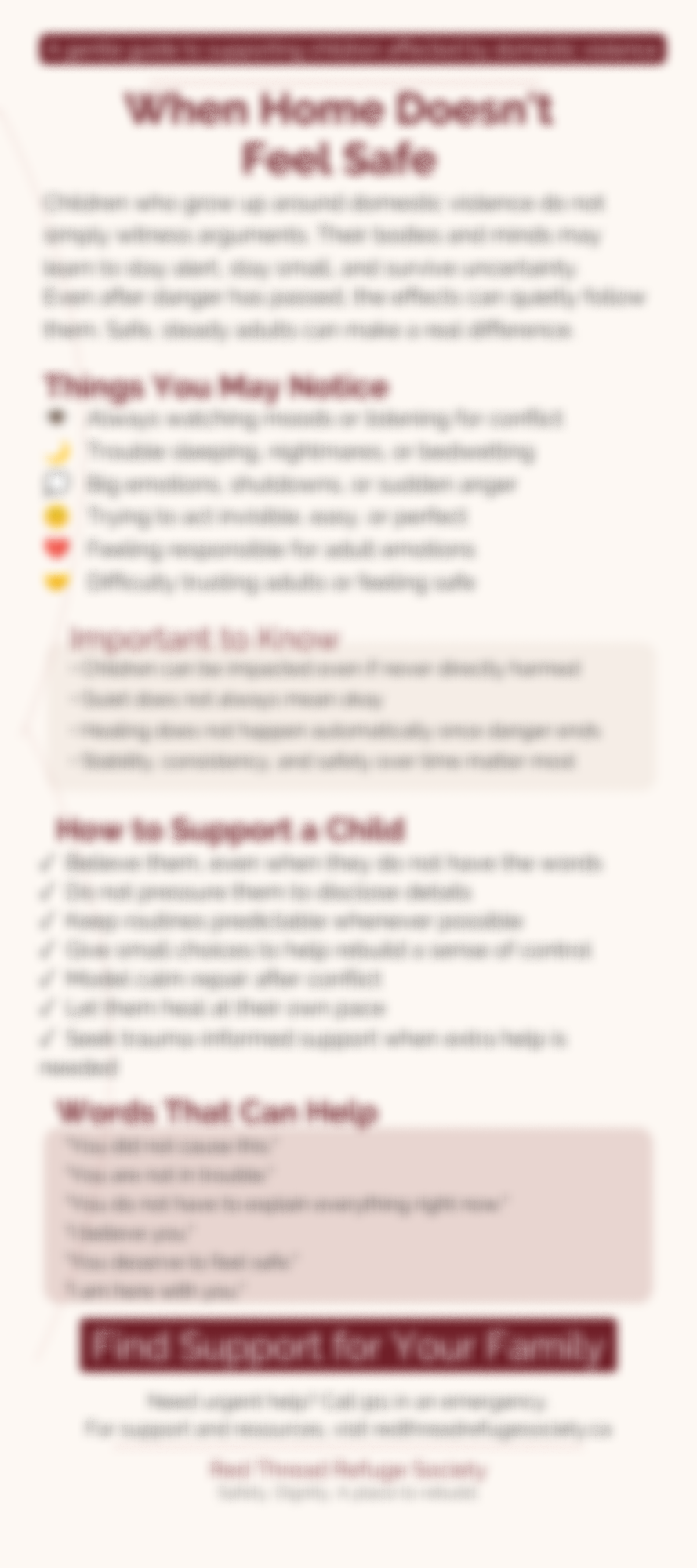
When Home Doesn’t Feel Safe
A gentle guide for supporting children affected by domestic violence.
Read the GuideFOR PETS
Pet Safety Planning
Prepare documents, supplies, transportation and temporary care for your pet.
Protect My PetNeed support right now?
You do not need to be certain something is abuse before reaching out. Confidential support can help you understand your options and plan your next step.

What’s Normal for Most Kids Can Be Scary And Dangerous for Others
What Kids From Domestic Violence Homes Often Carry (That You Don’t Always See)
When Home Doesn’t Feel Safe
A gentle guide to supporting children affected by domestic violence
For the Little Hearts Carrying Too Much
Children who grow up around domestic violence do not simply “witness arguments.”
Their bodies and minds often learn to stay alert, stay small, and survive uncertainty.
Even after a family leaves, those effects can quietly follow them. This guide helps safe adults understand what a child may be carrying, and how to respond with patience, safety, and love.
Common Experiences (Often Misunderstood)
Living in constant alert mode (always listening, watching, scanning)
Learning to stay quiet, invisible, or “easy”
Feeling responsible for adult emotions
Sudden shifts between maturity and emotional overwhelm
Fear of making mistakes or “causing trouble”
Difficulty trusting safety, even in calm environments
Strong reactions to raised voices, doors closing, footsteps, or silence
These kids are not dramatic. They’re trained for danger.
Signs to Look For (At Home, School, or in the Community)
Not every child shows the same signs. Many hide them well.
Emotional & Behavioral Signs
Extreme people-pleasing or perfectionism
Intense guilt or shame over small things
Explosive emotions followed by deep withdrawal
Difficulty naming feelings (“I don’t know” is common)
Fear of getting others in trouble
Over-protectiveness of siblings or a parent
Physical & Nervous System Signs
Sleep issues, nightmares, night waking
Stomach aches or headaches without clear cause
Startle response to normal sounds
Chronic tension, clenching, or restlessness
These are adaptive survival responses, NOT CHARACTER FLAWS.
A Quiet Note for Caregivers & Survivors
If you see yourself or your child in this, you are not alone, and you didn’t fail. Awareness is protection. Understanding is power. And safety is something that can be rebuilt.
Social Signs
-Hyper-mature for their age or emotionally younger than peers
-Trouble with boundaries (too guarded or too open)
-Difficulty trusting adults
-Strong reactions to perceived rejection
Free Guides & Safety Tools
Private, practical resources for survivors, safe adults, and anyone trying to help someone they care about. Take what helps. Leave what does not.
Create a Safety Plan
A private, practical guide to help you think through safety at your own pace. It includes space to plan for important documents, children, pets, safe contacts, emergency items, transportation, and what you may need if you decide to leave.
There is no pressure to leave before you are ready. A safety plan is simply a way to give yourself more options.
Free download.